

In my first blog post, I briefly discussed how workaholism can affect those seeking a career in sports. I’m going to briefly touch on the study that I quoted in that part of the post.
Workaholism directly leads to burnout. Neurodivergent individuals are already more prone to burnout than their allistic peers.
Authors Matt Huml, Elizabeth Taylor and Marlene Dixon open their paper with this statement: ‘The relationship between employee and job can be tenuous.’
Employment is not just a necessary evil in a capitalistic society, it’s a necessity. This is where including disabled individuals and the profession’s expectations are in direct conflict.
Working in sports is a career where, as they state, “social norms drive aspiring employees to go beyond expected job assignments to secure employment, while also maintaining their workaholism to continue their employment.”
While there are many hypotheses as to why this is the case, here’s what we can do about it.
Watching Burnout
The Ellie Blog from Ellie Mental Health explains ten tenants to burnout to watch for.
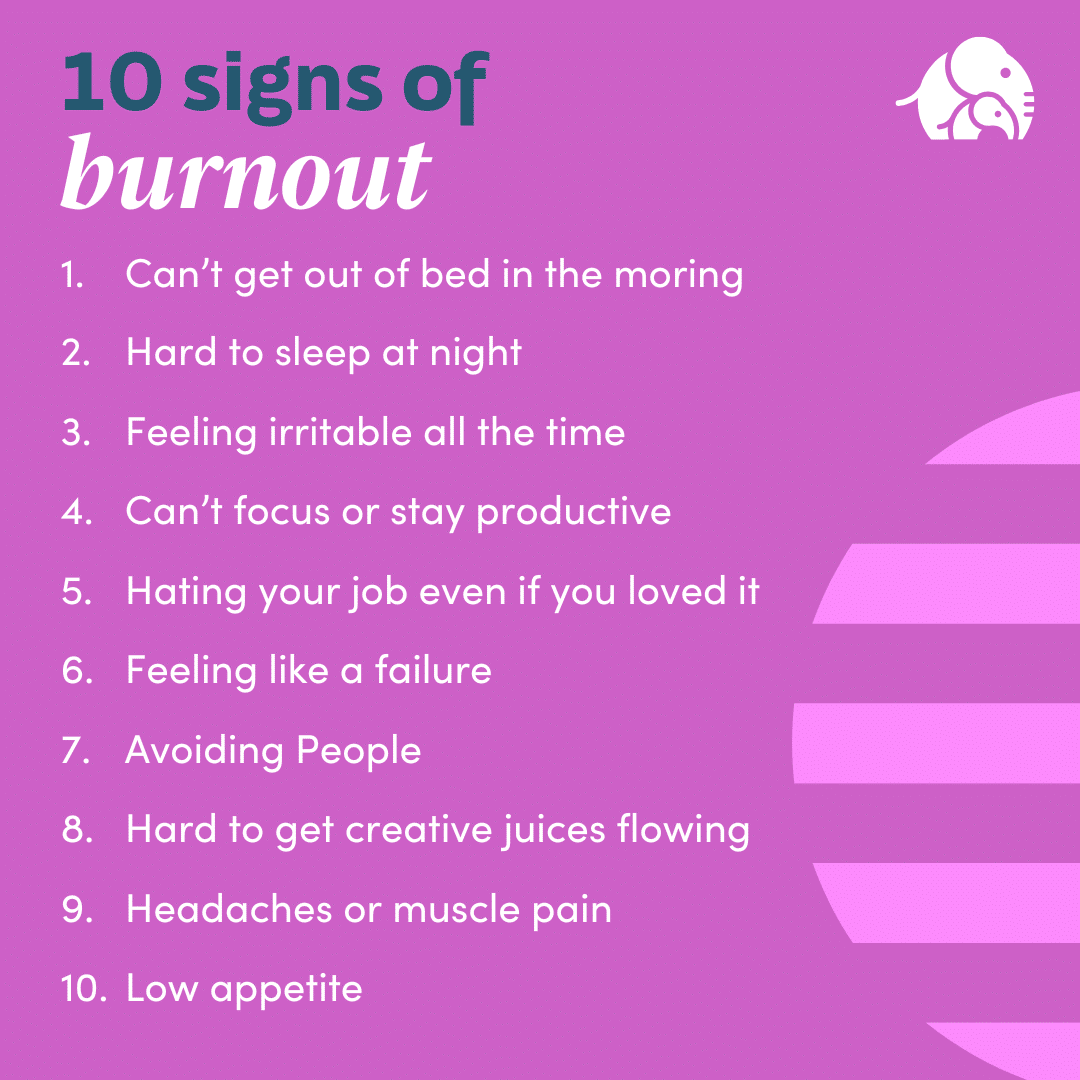
Ellie Mental Health cites an article by the Society of Human Resource Management from 2024 that states that 44% of survey respondents claiming a period of burnout in the previous year. Millennials are at the top of that list.
Alt Text: 10 Signs of Burnout – 1) Can’t get out of bed in the morning; 2) Hard to sleep at night; 3) Feeling Irritable all the time; 4) Can’t focus or stay productive; 5) Hating your job even if you loved it; 6) Feeling like a failure; 7) Avoiding people; 8) Hard to get creative juices flowing; 9) Headaches or muscle pain; 10) Low appetite
For neurodivergent burnout, two key differences between it and allistic burnout, are an increased sensitivity to sensory stimuli and a loss of interest in activities once enjoyed. Most allistics aren’t forced to hide their traits because of social stigmas and discrimination. Another one that hides nefariously is a difficulty managing daily tasks – taking care of things with the self or home.
The signs you can catch with yourself to prevent burnout are recognizing when you’re not properly eating, experiencing pain, or self-imposing isolation.
The signs to watch in your team is when they can’t stay productive or focused, more irritable than normal or being less creative than their usual standard.
The most dangerous signs to watch for are the negative self-talk, trouble waking up or falling asleep.
One of my catalysts for realizing that I needed to leave a prior job were the dangerous signs. I would have trouble falling asleep, often staying up until 1 or 2 am, then waking up at 5 am but laying in bed until 9:30.
The frequency which I would tell myself that I am a failure and unable to productively contribute were hourly, much like more recent happenings, from a personal stance.
With my own neurodivergence, one of the most prevalent signs that I am burned out, is the frequency I will play my favorite games – specifically role-playing games. What hobbies do you engage in, that if you would randomly stop doing them, would signal burnout?
Creating a space to prevent burnout
Ellie Mental Health states that to prevent burnout, the number one thing to do is talk it out. It’s important to identify the root cause. Preventing burnout is the number one reason to have a therapist or counselor. However, discussing it with a supervisor or an understanding co-worker can help prevent burnout at work. You can also advocate within your space to stop burnout from happening to someone else.
Setting professional boundaries is important as well. Athletic professionals must recognize their time as a precious commodity – it shouldn’t be handed out freely.
For disabled individuals and people who work with them, it’s also important to respect their individual needs and be understanding of what’s important to them.
What kind of space are you going to carve for yourself and your team to prevent burnout?
 Cadence Pierce - Portfolio